

A photographer fools the jury of a competition and wins the first prize for AI-generated images!
Provocation or act of resistance? It seems that the two motives pushed the photographer Miles Astray to carry out this superb stunt.
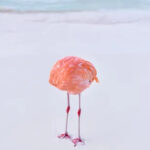
It was during the 1839 Awards, an international photography competition whose jury is, among others, made up of members of the New York Times, the Center Pompidou in Paris and Christie's, that the deception took place. It all starts with a photo, a most mysterious photo called Flamingone. This reveals a headless pink flamingo on a beach with heavenly colors. It is with this intriguing photo that Miles Astray enters the prestigious competition, in the category of photographs generated by AI. He won the first public prize and third place in the jury prize, except that, the highlight of the show, the image was never generated by AI!
Taken on a beach in Aruba, this photo is “as real as the simple belly rub the bird indulges in,” Astray quips. And yes, if the bird's head is hidden, it's because the flamingo is scratching its belly, creating an optical illusion that made this photo the ideal candidate for this competition. Once the truth was revealed, the prize was of course withdrawn from the photographer, still earning him widespread recognition. But why did you commit such a transgression? Quite simply to give the AI its due.
In a context where content generated by AI invades the pictorial landscape, threatening, every day a little more, to replace artists, photographers or graphic designers, Astray wanted to prove that “human interpreters can still beat the machine, and that creativity and emotion cannot be reduced to a simple series of numbers.” He also explains that after having seen several times "images generated by AI prevail over real photos in competitions" he had the idea of reversing the situation by demonstrating that humans, too, can have the upper hand over the AI, making his surreal photo the first to beat the machine.
Astray, however, did not take lightly the ethical concerns that arise from this deception; it clears itself of them by highlighting the irony of the situation: productions and creations generated by AI constantly usurp those generated by humans. , so why not return the favor? This “rant”. masterful against AI nevertheless received congratulations from Lily Fierman, director of the competition, who saw it as a “powerful message” that she hopes will lead to “awareness”. So, sometimes transgression is good!