

Camille Claudel & Bernhard Hoetger: the 1905 exhibition
Camille Claudel Museum
From September 12, 2026 to January 10, 2027
An exhibition dedicated to the artistic dialogue between Camille Claudel and Bernhard Hoetger. We went for you:
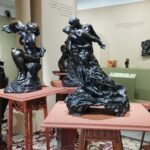
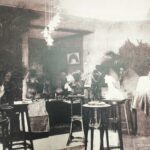
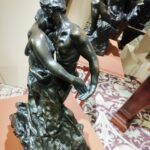
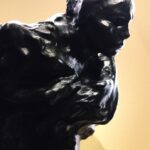
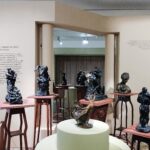
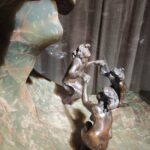
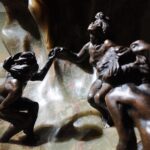
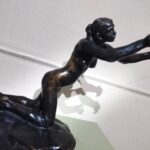
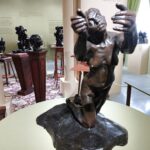
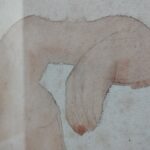
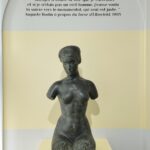
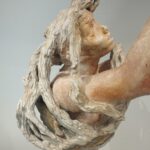
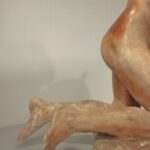
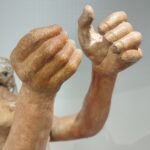
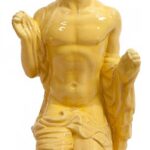
On one side, a bronze storm, on the other, an onyx wave: The Storm by Bernhard Hoetger and The Wave by Camille Claudel. In 1905, in the gallery of the dealer and publisher Eugène Blot, the works of the two sculptors were displayed side by side, she at the height of her powers, he ten years her junior. One hundred and twenty years later, the Camille Claudel Museum reenacts this encounter. Nearly ninety works, sculptures, drawings, paintings, and photographs, resurrect the original display, in a scenography reminiscent of a Parisian gallery of the Belle Époque. The sculptor's masterpieces are presented alongside Hoetger's early works, which are being shownfor the first time to the French public.
Then their paths diverged. Claudel, seeking recognition, saw her creativity dry up: she put down her tools the following year, before the long decades of internment. Hoetger, on the other hand, returned to Germany and pursued a prolific career as a sculptor, painter, architect, and designer. The exhibition leaves nothing out, not even her relationship, in the final years of her life, with the German National Socialist party. From this turning point emerges a rare insight: the very last years of Camille Claudel's creative output, just before silence descended upon her. Two sculptors brought together for a moment under the same light, whom History was about to separate forever.
Return to the exhibition:
Co-produced with the Paula Modersohn-Becker Museum in Bremen and the Alte Nationalgalerie in Berlin, the exhibition opening at the Camille Claudel Museum is, from the outset, exceptional. In 1905, Bernhard Hoetger and Camille Claudel shared the same exhibition. One of the final stages in the sculptor's career, whose work was praised by Louis Vauxcelles at the time. Camille Claudel was forty years old at the opening. She was nearing the end of her career, having stopped sculpting in 1906. Her critical and press acclaim was at its peak. Bernhard Hoetger, on the other hand, was thirty-one. His career was taking off.
Yet, he was the most represented, with thirty-eight sculptures and twenty drawings, while Camille Claudel exhibited only twelve bronzes. For Claudel, each work bore the mark of meticulous attention to detail and the extreme refinement of form. In 1905, she thus shared the spotlight with an avant-garde artist ten years her junior.
The exhibition was held from December 4 to 16, 1905, in the gallery of the publisher and art dealer Eugène Blot. A brief exhibition, in a gallery that no longer exists, yet one that left a lasting impression. More than ever, the press, in this instance, ensured posterity.
What is striking in Camille Claudel's work is her propensity to listen to form before catastrophe. Mourning before the end of the world, love before it breaks. Everything refers to sudden bursts of emotion, to images on the verge of collapse. Eugène Blot publishes her creations, distributes them, and markets them. And, even in these works destined to find their place in the collections of art lovers, their power remains undiminished.
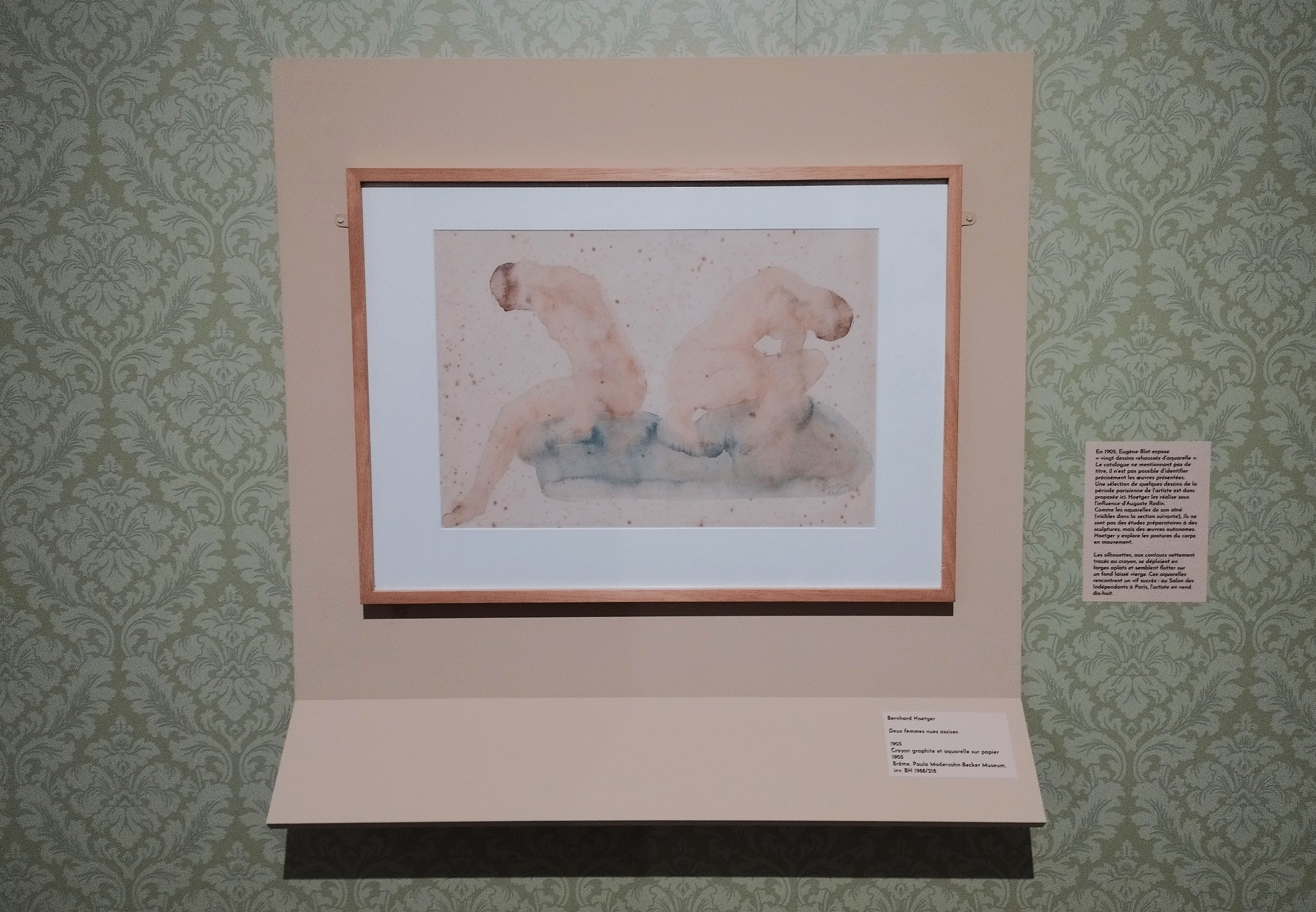
I also have a soft spot for Hoetger's drawings, on which float endless silhouettes with indistinct outlines. A kind of wandering soul, bodies, tall, beautiful beings, still inhabited by Rodin.
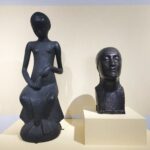
The Camille Claudel Museum's approach is to add to the reconstruction of the 1905 exhibition a display capable of conveying the personality of Hoetger, largely unknown in France. We then follow the journey of an artist who seems never to have truly settled down, moving from vibrant expressiveness to simplified forms, then returning to expressionism. An artist who joined the Nazi party in 1934, seeking recognition, yet whose art was condemned as "degenerate" by the regime.
Maillol captivated him with his Mediterranean, a sculpture that marked a turning point in the history of European sculpture. Lightness and poetry are at the heart of this interlude in his work. A moment of respite, before the return to expressionism and, much later, the ideological compromises.
The Camille Claudel Museum has made a courageous choice. It presents this extraordinary 1905 exhibition, made possible by the collaboration between the three institutions, and also shows us how two artists, brought together for a time, can follow such different paths. One approaching the end of her career at the height of her artistic powers. The other continues his experimentation, exploring form and idea, until he becomes entangled in the political choices of the 1930s.
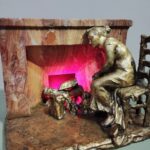
What remains is the power of Camille Claudel, the application of her art, the tragedy of her compositions. Her twelve bronzes from 1905, reunited once again. And this poetry, never quantified, this ability, even in the commercialization of her works, to bring a touch of magic. A nightlight with a red glow: the fire in the hearth rises in the hearth of our hearts.
Camille Claudel represents emancipation from the master, the monstrous master that is Rodin. But it is also a journey through his time: finding his place among men, remaining worthy of his poetry, remaining worthy of the form.
CAMILLE CLAUDEL MUSEUM
From September 12, 2026 to January 10, 2027
10 rue Gustave Flaubert,
10400 Nogent-sur-Seine
From September 12 to October 31, Tue-Sun 10am-6pm
From November 2 to January 10 2027 Wed. to Sun. 10am-5pm
Price: €10 - Reduced price: €6 - Free for under 26s
Discover